


You operate it
Discovery, workflow teardown, the pipeline build, then a parallel run against your existing process until output is consistently publishable. Handover gives you the running system, plus the documentation and runbooks to operate it.
About GroovyMark
GroovyMark exists because of one gap: what a team is asked to produce against what it can actually produce. Rented, generic tooling filled that gap and does not hold at volume. We build the other thing — one production system per client.
The argument the company is built on, in the order it happened. Disagree with all three and we are not the right people to build your content system — and who it is and is not for says so plainly.
Build systems. Don’t rent tools.
One system per client, running through a single AI vendor, with disclosure applied at generation and inputs tracked through every run. When it is finished you own it, or we operate it for you. There is no third option where you rent a seat forever.
None of this is values-page decoration. Each position changes what gets written, what gets bought, and what you hold at the end.
A system you own runs on your accounts, holds your data and answers to your team. A tool you rent can be repriced or discontinued while your content calendar is still running. The code behind it stays with us, the way a studio keeps its working files, and that is how we can guarantee it keeps working and fix it when it does not.
Every extra tool is another processor, another retention policy, another breach surface. One AI vendor keeps the data map short enough to put in front of a client without a page of caveats.
Applied at upload, it is a policy someone has to remember. Applied at generation and carried through every derivative, it is a property of the system — one layer to change when a rule tightens.
Software that is never done is software somebody keeps paying attention to, usually the client. We build to a stopping point: the pipeline runs, the failure modes are handled, the documentation matches what the system does.
Nobody should have to move their content plan into our tool. It stays in the sheet, board or calendar your team already keeps, and the system reads from there.
Five years of building things that had to keep running after we left. The content production system is the newest of them, and it exists because the earlier work taught us what breaks once nobody is watching.
Trust-driven business websites for medium-sized companies.
Booking, billing and portals for Australia and the UK. The first work that had to survive handover.
A dedicated engineering team, after the agentic experiments stopped being experiments.
Content was the largest team in the company and the hardest to scale. Every new client meant another hire.
Built the system, moved our own accounts onto it, and stopped hiring.
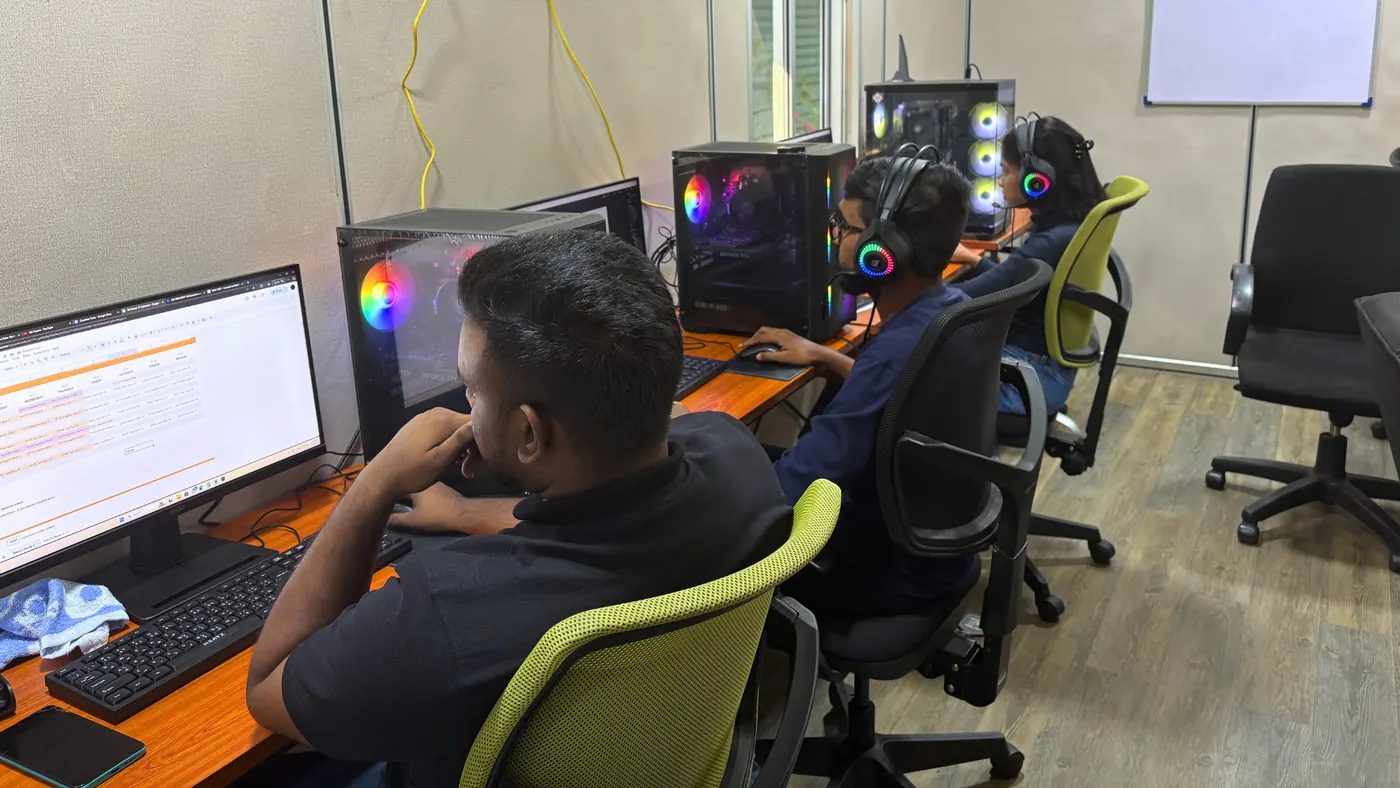
Before any of this was a product it was our own payroll problem. Twelve people, an office, and a content operation that needed another hire every time a client signed. We built the system to fix it, moved our own accounts onto it, and stopped hiring.
12 2
People on the payroll, before and after
Ten roles went to the system: editing, animation, scripting, voice, thumbnails, scheduling, publishing, review, reporting and the coordination around all of it. What is left is the two of us — one operating it, one building it.
On one client account we measured the same change end to end: nine people to two, with output up 34% — four months of records, published with the caveats attached.
It was 12. The system took the other 10 roles, which is the same thing we are asking you to buy — so the count stays on the page rather than being quietly rounded up. There is no account layer between you and the people writing your pipeline, because there is nobody left to be one.
Founder & CEO
Scopes your build, runs the pipeline, and is on the call
Meta Certified Social Media Manager, entrepreneur and researcher. Has worked with clients across the UK, USA, Australia, Dubai, New Zealand and Canada, helping companies scale through sustainable organic growth rather than bought reach.
CTO & Senior Software Engineer
Architects and builds the system that gets handed to you
Experienced software engineer with over six years in industry. Leads the technical vision and architecture behind everything shipped — full-stack platforms, cloud-native systems and infrastructure built to scale. Bridges the technology and what the business actually needs it to do.
Where we are Colombo, Sri Lanka — with a branch in Perth, Australia. Clients are worked with async across time zones, which is a habit the studio built long before it built this.
Same pipeline, same build, same people. What changes is whether your team operates it or we do — and the two are priced and scoped separately.
Discovery, workflow teardown, the pipeline build, then a parallel run against your existing process until output is consistently publishable. Handover gives you the running system, plus the documentation and runbooks to operate it.
The same system, run as a managed service: planning with your team, the approval workflow your governance needs, scheduling and reporting per channel. Your accounts, your data.
If the tools you publish through disappeared tomorrow, how much of your content operation would still exist?
Book a build callWe keep three entries on your device so you are not asked this again. Nothing here profiles you, and nothing is shared with an advertiser. Change it whenever you like, or ask us to delete the record entirely.
Remembers this choice so you are not asked again, and keeps the record that proves we asked. Cannot be switched off.
Would remember preferences between visits. Nothing uses this today.
Would build an advertising profile. We do not do this, and will ask again if that ever changes.